
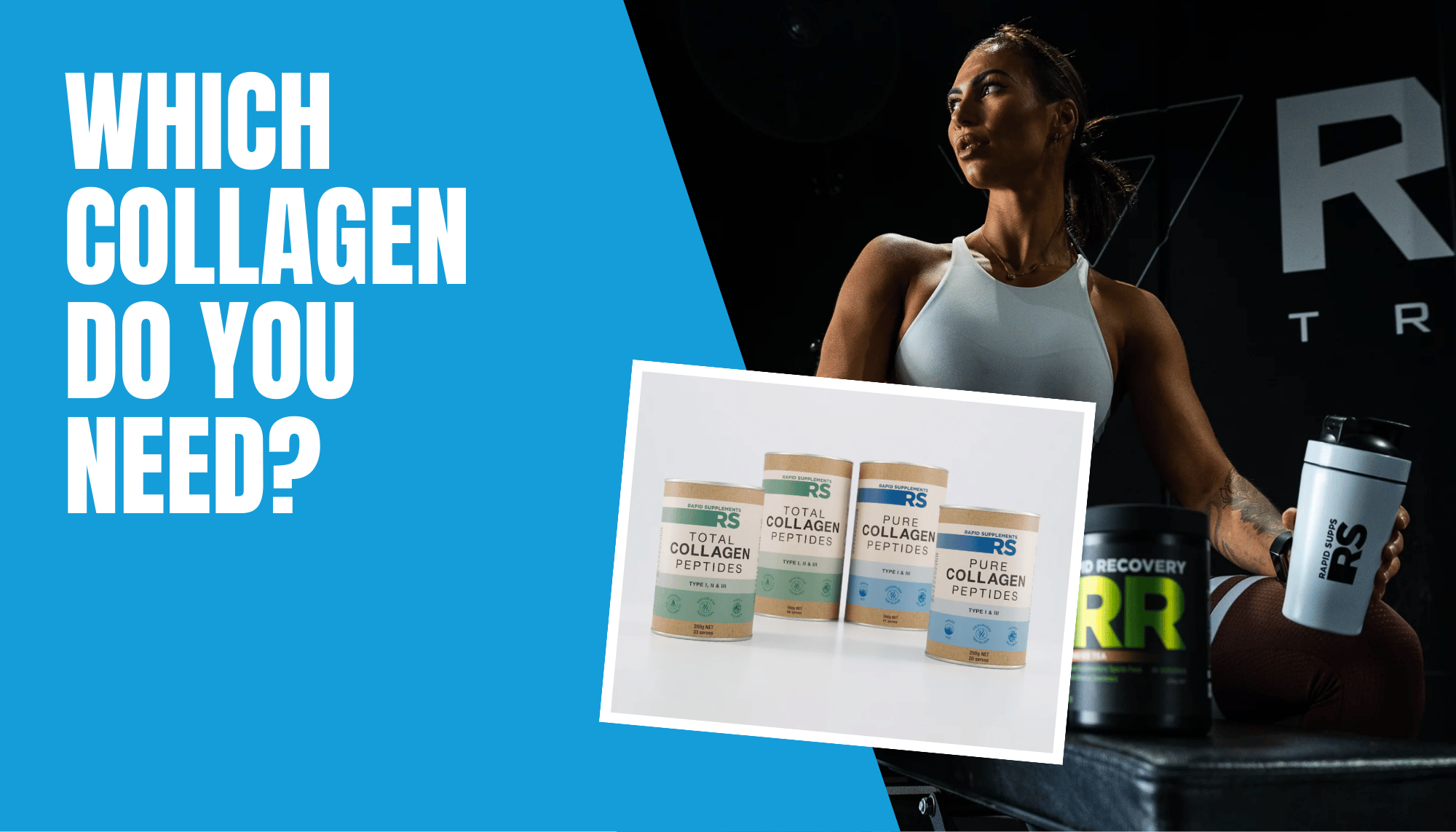
Collagen Types I, II & III: Which One Do You Actually Need?
Walk into any health store and you'll be met with an overwhelming array of collagen products. Bovine, marine, hydrolysed, peptides, and somewhere in the fine print, the type. Type I. Type II. Type III. But what do these numbers actually mean, and does the difference matter for your health goals?
The short answer: yes, it matters. Different collagen types serve different structural roles in the body. Choosing the right one, or the right combination, can make a real difference in how you feel, move, and look.
What Is Collagen, Exactly?
Collagen is the most abundant protein in the human body, making up roughly 30% of our total protein content. It's the primary structural component of skin, tendons, ligaments, cartilage, bones, muscles, and even the gut lining; the connective framework that holds everything together.
There are at least 28 identified types of collagen in the body, but three of them dominate: Types I, II, and III. These are the collagen types most relevant to supplementation, and understanding their distinct roles helps you make a more informed choice.
As we age, our body's ability to produce collagen declines by roughly 1–1.5% per year after the age of 25. By the time we hit our forties and fifties, the cumulative deficit becomes visible and felt.
The Three Major Types: At a Glance
Type I
The most prevalent collagen in the human body. Found in skin, bones, tendons, ligaments, and organ tissue. The primary driver of skin firmness and elasticity.
Targets: Skin, bones, hair, nails, gut lining
Type II
Found almost exclusively in cartilage. The go-to for joint health; cushions and lubricates joints, making it essential for mobility and reducing stiffness.
Targets: Cartilage, joints, mobility
Type III
Works alongside Type I in skin, blood vessels, and organs. Critical for wound healing, tissue repair, and gut integrity.
Targets: Skin, gut lining, recovery, blood vessels
Type I Collagen: The Skin, Bone & Beauty Driver
Type I collagen is the workhorse. It makes up approximately 90% of the body's collagen and is found in nearly every tissue, most notably skin, tendons, bones, and connective tissue. This is the collagen most associated with the visible signs of ageing.
When Type I collagen declines, skin loses its firmness, fine lines deepen, and the overall tone and bounce of skin diminishes. Beyond aesthetics, it's also integral to bone density, tendon strength, and the gut lining.
Who benefits most? Anyone concerned with skin ageing, hair and nail growth, bone health, or gut lining support. It's also relevant for athletes and active individuals looking to support tendon and ligament repair after training.
Type II Collagen: The Joint Health Specialist
Type II collagen has one primary home in the body: cartilage. This makes it the most relevant collagen type for anyone experiencing joint discomfort, reduced mobility, or the wear-and-tear of an active lifestyle.
Unlike Types I and III, which are hydrolysed into peptides for supplementation, Type II collagen supplements often come in a native (undenatured) form. Research suggests that undenatured Type II collagen may work through immune-mediated mechanisms to reduce cartilage breakdown, rather than simply providing amino acid building blocks.
Who benefits most? Those with joint pain, early signs of osteoarthritis, athletes with repetitive joint stress, or anyone looking to maintain long-term cartilage health. If stiffness in the knees, hips, or shoulders is a concern, Type II should be a priority.
Type III Collagen: The Underrated Partner
Often overshadowed by Type I, Type III collagen plays a critical supporting role. It's found in skin alongside Type I and is heavily concentrated in blood vessel walls, the gut lining, and internal organs. It's also essential during the early phases of wound healing.
Type III is sometimes called "baby collagen" because it's abundantly produced in youth and naturally declines with age. It contributes to skin softness and plumpness, and plays an important role in tissue elasticity beyond what Type I provides alone.
The Case for a Combined Approach
For most people, especially those who are active, ageing, or want full-body support, a supplement containing all three types makes the most practical sense. Types I and III are naturally complementary and are found together in bovine collagen. Adding Type II ensures you're covering joint, skin, muscle, and connective tissue health simultaneously.
Our Recommended Collagen Supplements
At Nutrition Capital, we stock clinically-informed collagen formulas designed for real results. Here's our top Collagen recommendation for all 3:
Rapid Supps Total Collagen Peptides: Types I, II & III
A clinically formulated blend of all three collagen types, sourced from grass-fed bovine and wild-caught marine collagen. Designed for full-body support across joints, skin, muscle, and recovery in one easy daily serve.
- 7.4g total collagen per serve: 4.9g bovine, 2.5g marine
- Contains 100mg L-Tryptophan to support protein synthesis
- Types I, II & III for joint, tendon, cartilage, skin & muscle support
- Grass-fed & wild-caught collagen sources
- Odourless, tasteless, and dissolves easily in any liquid
- Ideal for active lifestyles, ageing support, or post-workout recovery
- Made for daily use: no fuss, no flavour, just results
A Note on Quality & Absorption
Not all collagen supplements are equivalent. The key term to look for is hydrolysed; this means the collagen has been broken down into smaller peptides that are more readily absorbed through the gut wall and delivered to target tissues. Non-hydrolysed collagen may pass through the digestive system with much lower efficacy.
Source quality also matters. Grass-fed bovine and wild-caught marine sources are considered the gold standard, offering a cleaner amino acid profile compared to conventional sources.
Finally, pairing collagen with Vitamin C is well-supported by research. Vitamin C is an essential co-factor in collagen synthesis; without it, the body struggles to properly form and stabilise new collagen fibres.
The most important step is simply getting started. Collagen supplementation is most effective when taken consistently over 8–12 weeks, so pick the formula that fits your goals and make it a daily habit.
This article is for informational purposes only and does not constitute medical advice. Always consult a healthcare professional before beginning any new supplement regimen.